
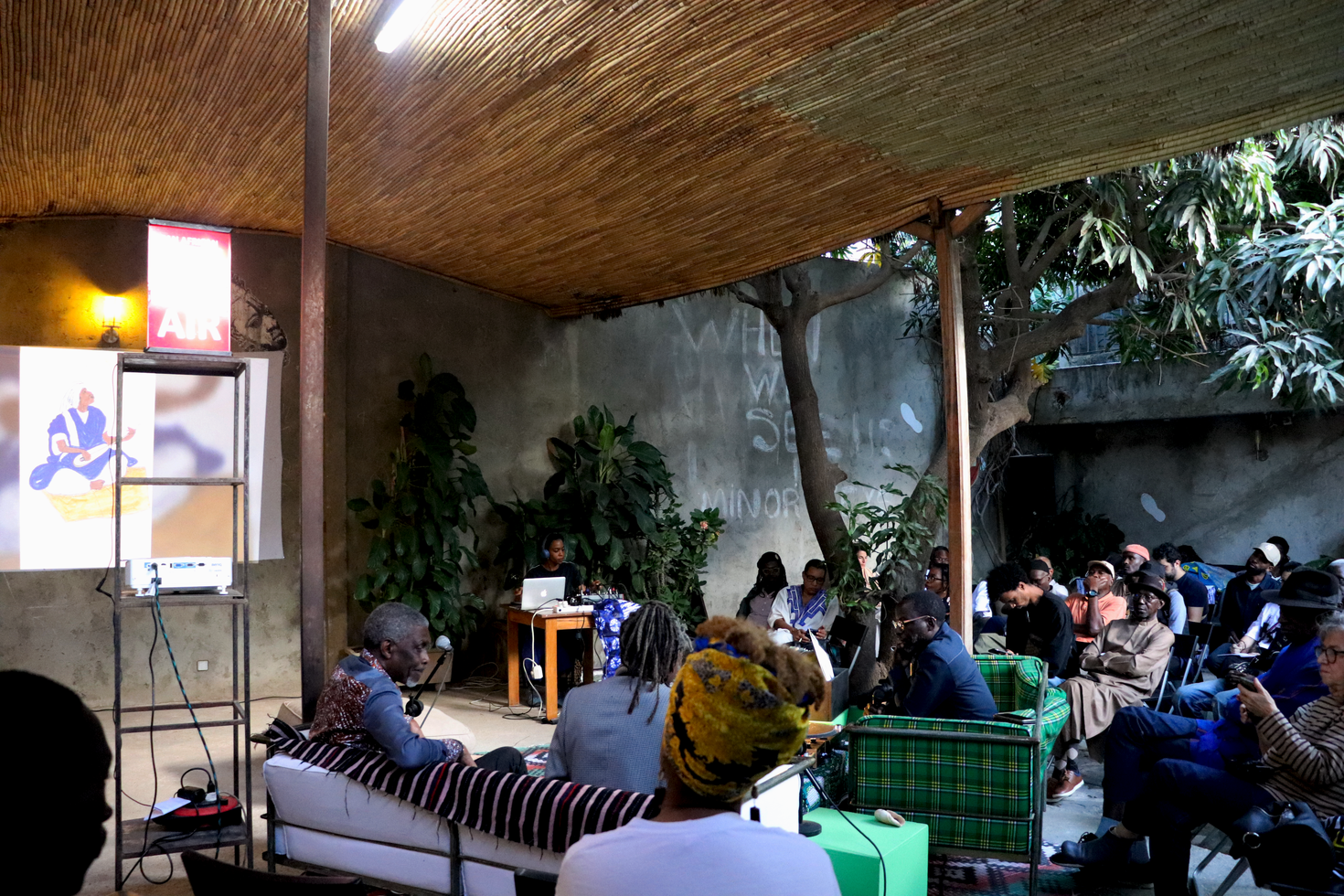
Introductory Conversation "Cultural Policies in Senegal: Heritage, Stakes and Challenges".
We are glad to announce a new public program entitled Cultural Policy that is grounded in a focused reflection on "Cultural Policies in Senegal: Heritage, Stakes and Challenges".
Introductory Conversation
Friday, February 13, 2026, at 6 PM
A retrospective of the times of people testifying to the vision of cultural policy structuring, the different editions of the Dakar Biennale, culture, and knowledge up to the present day.
Speakers: Mrs. Ndeye Khoudia Diagne, Professor Ibrahima Wane, alongside additional speakers to be announced shortly under the Moderation of Professor Babacar Mbaye Diop.
Cultural Policy
The Cultural Policy program will explore Senegal's cultural landscape through a historical lens, focusing on how structuring political and governmental legacies have shaped the arts today. This program is developed in collaboration with Aboubacar Demba Cissokho. The objective is to highlight the essential role of arts and culture in Senegal's history and continuous development.
This moment is dedicated to the exchange of knowledge and elucidation, drawing on expertise and testimonies to explore fundamental questions: What is culture? What does political culture imply? How is culture constructed, encompassing communities, traditions, heritage, and infrastructure?
We will examine the linguistic definitions of "culture" and "policy," stressing the need to revisit these terms—or discover existing linguistic frameworks or create new ones—to fully include the contributions of all social actors. This articulation is vital for conveying the understanding of culture's critical precedent in development.
Culture is a primary asset, knowledge-driven, essential for holistic societal advancement—influencing education, governance, tourism, and economic prosperity. Our immediate goal is to cultivate a deep and broad understanding of its crucial importance. This collective effort strengthens our shared identity by facilitating mutual engagement with the past, present, and future, fostering synergy between the public and private sectors. This approach stimulates intellectual curiosity and motivates all generations and individuals to integrate this dedication into their core responsibilities.